

- Form
- Blood draw at a partner lab
- Price
- $199 one-time, confirmed after eligibility review
- Prescription
- Yes, ordered by a licensed clinician
- FDA status
- Standard clinical lab tests performed in CLIA-certified labs
How Comprehensive Lab Panel works
Your clinician orders a panel based on your intake answers. You visit a partner lab for a standard blood draw, fasting if instructed. The lab runs the tests, results return to your clinician, and you review them together in an online visit. Some results lead to a treatment plan, some to a recheck, and some to a referral.
Who it’s for, and who it isn’t
May be a fit
- Adults considering hormone therapy, TRT, a GLP-1 medication or peptide therapy
- Adults in their 40s, 50s and beyond who want a documented baseline
- People with symptoms such as fatigue, weight change, low libido or brain fog who want common causes checked
- People already on treatment who need monitoring labs
Usually not a fit
- Urgent symptoms such as chest pain, fainting, severe shortness of breath or sudden weakness: call 911
- Replacing cancer screening such as mammograms or colonoscopy
- Diagnosing sleep apnea or other conditions that need a dedicated test
- Anyone under 18
What’s included
- Clinician-ordered blood panel tailored to your age, sex and goals
- Draw at a partner lab location
- Results reviewed by a licensed clinician with plain-language explanation
- A written summary of what is in range, what is borderline and what to do next
- No membership fee
Possible side effects
- Brief sting from the needle
- Minor bruising at the draw site
- Lightheadedness or fainting in some people, especially after fasting
- Rarely, a small infection or vein irritation at the site
This isn’t a complete list. Your clinician reviews risks, interactions and warnings with you before prescribing. In an emergency, call 911.
What the evidence says
The markers in this panel are routine clinical tests, such as a comprehensive metabolic panel, A1c, lipids and thyroid function, with established reference ranges and clear roles in diagnosis and monitoring. Their value depends on interpretation alongside your symptoms and history; a single result in or out of range is rarely the whole story.
What the panel looks at
The exact list is set by your clinician, because a 48-year-old woman in perimenopause and a 58-year-old man asking about testosterone need different markers. Most panels draw from these groups:
- Blood sugar and insulin resistance: fasting glucose, hemoglobin A1c and, where useful, fasting insulin
- Heart risk: a lipid panel, with options such as apoB or Lp(a), and inflammation markers like hs-CRP
- Hormones: sex hormones such as estradiol or testosterone, with related markers like SHBG, LH or FSH
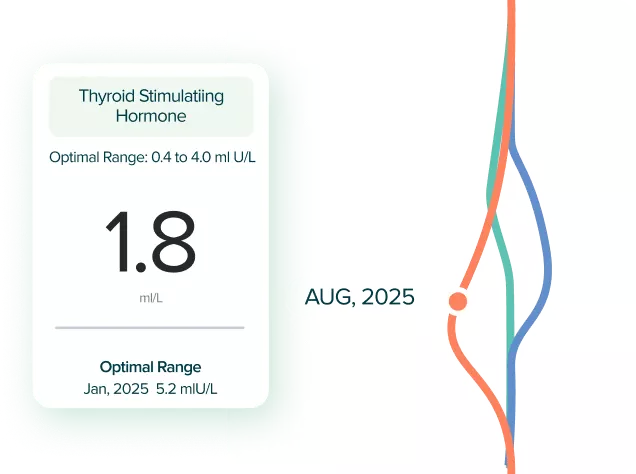
- Thyroid: TSH and, if needed, free T4 and free T3
- Organ function: a comprehensive metabolic panel with kidney and liver markers, glucose and electrolytes
- Blood count: red cells, white cells, platelets and hematocrit
- Nutrients: vitamin D, ferritin and iron, and B12 when relevant
Why a baseline comes first
Many midlife symptoms overlap. Tiredness can come from low iron, an underactive thyroid, poor sleep, high blood sugar or shifting hormones. Testing helps your clinician sort likely causes from unlikely ones before recommending anything.
A baseline also makes treatment safer. Testosterone therapy needs a hematocrit and PSA history, GLP-1 medicines call for kidney and blood sugar checks, and hormone therapy decisions are easier with your lipids and blood pressure on file. When you recheck later, you can see real change instead of guessing.
Reading your results: normal versus right for you
Each result comes with a reference range, which describes where most healthy people fall. As the National Library of Medicine notes, being outside the range does not always mean a problem, and being inside it does not guarantee good health.
Your clinician interprets each number alongside your symptoms, age and goals. For blood sugar, for example, the CDC defines prediabetes as an A1c of 5.7% to 6.4% or a fasting glucose of 100 to 125 mg/dL. A result just under those lines still deserves attention if it has been climbing year after year.
How to prepare
Your instructions will say whether to fast. When fasting is needed, it usually means nothing but water for 8 to 12 hours. Morning draws are preferred for testosterone, and timing in your cycle can matter for some female hormone tests.
Keep taking prescribed medicines unless told otherwise, and tell your clinician about supplements. Biotin, found in many hair and nail products, can interfere with some lab tests, including thyroid and hormone assays, so you may be asked to pause it for a few days.
Retesting and tracking over time
One panel is a snapshot; a series of panels shows direction. If you start hormone therapy, testosterone, a GLP-1 medicine or another treatment, your clinician will usually repeat selected markers within the first few months and then at regular intervals to check both benefit and safety.
For the clearest comparison, try to test under similar conditions each time: the same time of day, the same fasting status and, where possible, the same lab. Different labs can use different methods and reference ranges, so a small shift between labs may not mean a real change in your body.
What a blood panel cannot tell you
A routine panel does not screen for most cancers, diagnose sleep apnea, or show your daily cortisol rhythm or gut health. It is also a single snapshot. Specialty tests such as the DUTCH hormone test, gut panels, a continuous glucose monitor or Galleri can add detail for specific questions, but most people should start here.
More tests are not always better. Every extra marker raises the chance of a borderline result that leads to worry or follow-up testing without changing your care.
Price and next steps
The Comprehensive Lab Panel is $199, a one-time price confirmed during your eligibility review. There is no membership fee. If you already have recent labs from your own doctor, your clinician may be able to use them instead.
Once results are back, you meet with a licensed clinician to go through them. From there you might start a treatment, make lifestyle changes and recheck in a few months, or get a referral for something that needs in-person care.
Go deeper on Comprehensive Lab Panel
 Lab testingLab testing · 4 min readFinger-prick kit or lab draw: which gives you a better baseline?Finger-prick kits are convenient, but some markers need a venous draw. See where home kits work, where they fall short, and why our panel uses a lab.Read more
 Lab testingBaseline labs · 5 min readThe lab work behind a safe start on hormone therapyWhich blood tests matter before starting HRT, testosterone or enclomiphene, what each one tells your clinician, and why there is no single target level.Read more
 Lab testingLab panel prep · 5 min readGetting ready for your blood drawFasting, biotin, timing, exercise and alcohol: what to do in the 48 hours before your HealifyMD blood draw so your lab results reflect the real you.Read more
 Lab testingComparing lab options · 4 min readHealifyMD's lab panel compared with Function Health and SuperpowerHow a clinician-led HealifyMD lab panel compares with lab memberships like Function Health and Superpower, and how to pick the right fit for your goals.Read more
Prescription treatments are available only to eligible patients after a clinical evaluation by an independently licensed clinician.
Comprehensive Lab Panel: common questions
Do I have to fast?
It depends on the markers ordered. Your instructions will tell you; fasting usually means water only for 8 to 12 hours before the draw.
Can I use labs I already have?
Often yes, if they are recent and include what your clinician needs. Upload them during your assessment and your clinician will tell you what, if anything, is missing.
Will insurance pay for it?
HealifyMD does not bill insurance. Some people submit receipts to their plan or use HSA or FSA funds, but coverage is not guaranteed.
How long do results take?
Most routine markers return within a few business days of your draw, and your clinician will reach out to schedule a review.
Does this panel check for cancer?
No. A routine panel is not a cancer screen. Keep up with recommended screenings such as colonoscopy and mammograms.
How often should I retest?
If you start a treatment, monitoring labs are often repeated within a few months and then periodically. Otherwise, many adults recheck once a year.
What if something is abnormal?
Your clinician explains what it means and recommends next steps, which may include a repeat test, a treatment change or a referral to in-person care.
Sources
We cite government agencies, professional societies and peer-reviewed research. See our editorial policy.
- Comprehensive metabolic panel (CMP)MedlinePlus (National Library of Medicine)
- How to understand your lab resultsMedlinePlus (National Library of Medicine)
- Diabetes testingCenters for Disease Control and Prevention
- Biotin interference with clinical laboratory testsHealth Sciences Authority (Singapore)