

- Starts around
- Age 30, gradually
- During menopause transition
- Fat gain roughly doubles; lean mass begins to fall
- Where fat goes
- Toward the center of the body and around organs
- Best protection
- Muscle-strengthening activity at least 2 days a week
Two changes, one number
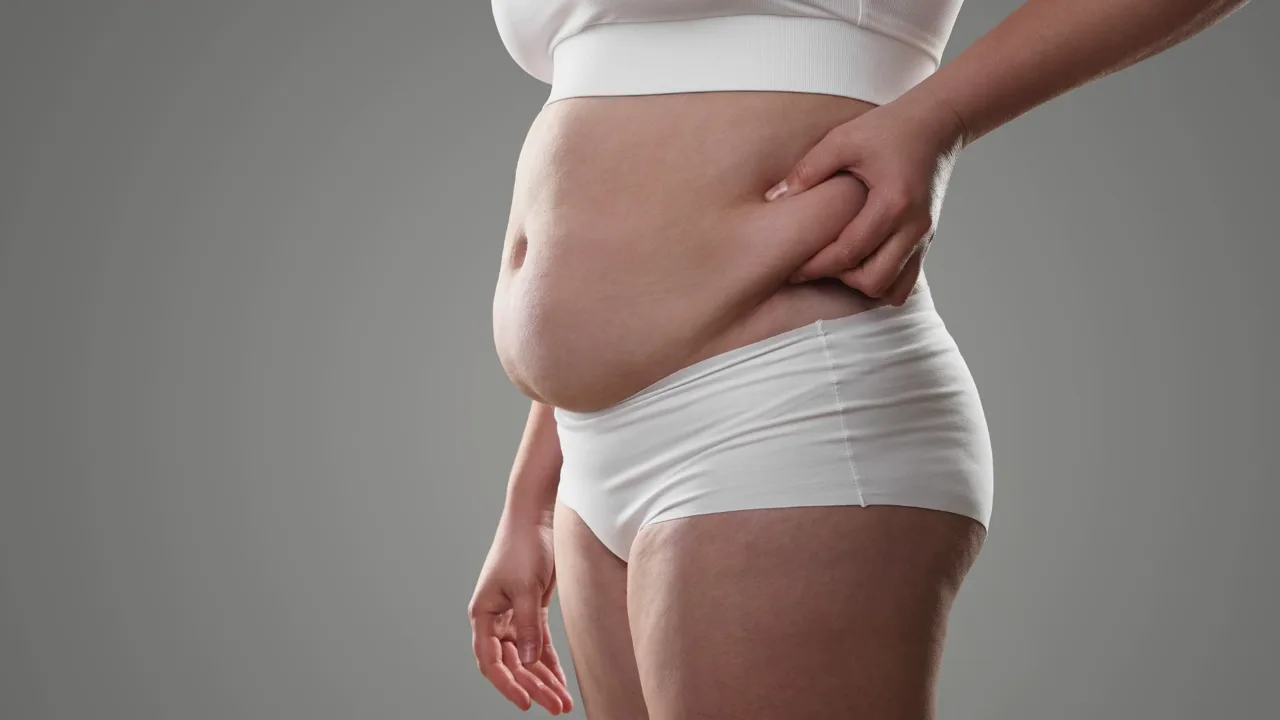
MedlinePlus describes a predictable pattern with age: after about 30, lean tissue, including muscle and organ tissue, tends to decline, while body fat rises steadily and shifts toward the center of the body. Bone mineral density also falls over time.
Because one tissue is shrinking while another grows, your weight can look stable even as your body composition changes considerably. That is why many people feel softer, weaker or less fit at a weight that used to feel fine.
What the menopause transition adds
The Study of Women's Health Across the Nation (SWAN) tracked body composition by DXA scan through the menopause transition. Published in JCI Insight in 2019, the analysis found fat mass rose about 1.0% a year before the transition and about 1.7% a year during it. Lean mass, which had been inching up, began to decline by about 0.2% a year.
Weight, however, did not show the same acceleration, because fat gain was partly offset by lean mass loss. After the transition, body composition changes leveled off. The takeaway is that the years around the final period are a window where protecting muscle pays off most.
Why muscle is worth protecting
The more advanced form of age-related muscle loss is called sarcopenia, a loss of muscle mass and strength that affects function. It is not inevitable, and it responds to training at any age.
- It burns more energy at rest than fat, helping with weight maintenance
- It acts as a major site for storing and using blood sugar
- It supports joints, balance and the ability to stay active
- It helps prevent falls and loss of independence later in life
- It works with bone, since loading muscles also loads bones
Why abdominal fat matters
Fat that collects around the waist and internal organs is more closely linked to insulin resistance, high blood pressure and heart disease than fat stored on the hips and thighs. A growing waistline can be a more useful warning sign than a rising weight, especially in midlife.
How to tell what's changing
You do not need specialized tests to notice a shift. A few simple measures, tracked every month or two, tell you much more than daily weigh-ins.
- Waist circumference, measured at the same spot each time
- How clothes fit, especially at the waist
- Strength markers, such as how many push-ups or sit-to-stands you can do, or the weights you lift
- Photos taken in the same light and pose
- A DXA scan or other body composition test if your clinician recommends one
How to protect muscle while losing fat
The CDC recommends muscle-strengthening activities that work all major muscle groups at least two days a week, alongside 150 minutes of moderate aerobic activity. For muscle, the key is progressive challenge: gradually increasing weight, repetitions or difficulty over time.
Nutrition matters too. Spreading protein across your meals supports muscle repair, and avoiding very aggressive calorie cuts limits how much muscle you lose during weight loss. This applies with extra force if you use weight-loss medications such as GLP-1s, because rapid weight loss can include lean mass along with fat.
A realistic starting point
If you have not lifted weights before, you do not need a gym membership or an elaborate program to begin. Two or three short sessions a week that cover the basic movement patterns are enough to start rebuilding strength.
A simple session might include sit-to-stands or squats, a pushing exercise such as wall or counter push-ups, a pulling exercise with a resistance band, a hip hinge such as a glute bridge, and a carry, like walking with a heavy bag in each hand. Choose a level where the last few repetitions feel hard but your form stays steady, and add a little resistance or a few repetitions every week or two.
If you have joint pain, heart disease, osteoporosis or a recent injury, check with a clinician or physical therapist first. They can help you adapt exercises so that you build strength safely rather than avoiding it altogether.
When it may be more than aging
Muscle loss that is rapid, one-sided or comes with unexplained weight loss needs medical attention. So does new weakness with muscle pain, difficulty climbing stairs or rising from a chair over weeks to months, or weight gain with thin arms and legs, a rounder face and easy bruising, which can signal Cushing's syndrome. In men, low testosterone can contribute to muscle loss and is worth testing if you also have low libido or erectile changes.
Common questions
Can I gain muscle after 50?
Yes. Muscle responds to progressive strength training at any age, though gains may come more slowly than in your 20s.
Is BMI a good measure in midlife?
BMI does not distinguish muscle from fat. Waist size and body composition tests add useful information.
Do home smart scales measure body fat accurately?
They give rough estimates that vary with hydration. They are more useful for trends than precise numbers.
Does weight loss always include some muscle?
Usually some, but strength training and adequate protein can reduce how much is lost.
Why have I gotten weaker even though my weight hasn't changed?
You may have lost muscle while gaining fat. This shift is common in midlife and can be reversed with training.
Does hormone therapy prevent muscle loss?
Evidence that hormone therapy alone preserves muscle is limited. Strength training remains the most reliable approach.
Can HealifyMD help me protect muscle while losing weight?
HealifyMD clinicians can build muscle preservation into a weight plan and adjust medication if lean mass appears to be dropping too quickly.
Sources
We cite government agencies, professional societies and peer-reviewed research. See our editorial policy.
- Aging changes in body shapeMedlinePlus (U.S. National Library of Medicine)
- Changes in body composition and weight during the menopause transition (SWAN, 2019)JCI Insight
- Adult Activity: An OverviewCenters for Disease Control and Prevention
- Cushing's SyndromeNational Institute of Diabetes and Digestive and Kidney Diseases
- Daily energy expenditure through the human life course (2021)Science (Tilburg University research portal)