

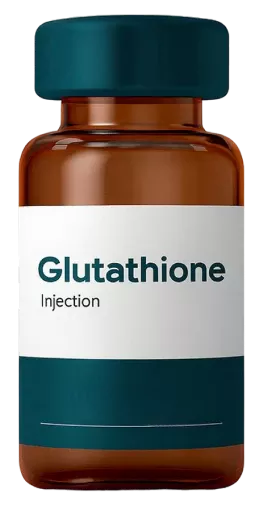
- Form
- Injection, given as prescribed
- Price
- From $125/month
- Prescription
- Required, after clinician review
- FDA status
- Compounded; not FDA-approved
Glutathione Injection is a compounded medication. Compounded medications are not FDA-approved, and the FDA has not reviewed them for safety, effectiveness or quality. What compounded means
How Glutathione Injection works
Glutathione is a small molecule made of three amino acids: glutamate, cysteine and glycine. It neutralizes reactive oxygen species, helps recycle other antioxidants such as vitamins C and E, and is used by the liver to process certain drugs and toxins. Injecting it bypasses digestion, though the body still breaks it down and rebuilds it inside cells.
Who it’s for, and who it isn’t
May be a fit
- Adults interested in antioxidant support who understand the evidence is limited
- People who have already addressed diet, alcohol, sleep and other basics
- People comfortable with injections and a defined trial period
Usually not a fit
- People who are pregnant or breastfeeding
- Anyone with a previous allergic reaction to glutathione
- People with asthma who have reacted to glutathione or sulfur-containing products, without specialist review
- Anyone undergoing chemotherapy or radiation, unless their oncology team approves
- People seeking skin lightening, which is not an approved use
What’s included
- Clinician review of history, medications and goals
- Compounded glutathione from a licensed U.S. pharmacy
- Instructions for administration
- Follow-up on tolerance and whether to continue
Possible side effects
- Pain, redness or bruising at the injection site
- Flushing or warmth
- Nausea or abdominal discomfort
- Headache
- Rare: allergic reactions including rash, swelling or wheezing
This isn’t a complete list. Your clinician reviews risks, interactions and warnings with you before prescribing. In an emergency, call 911.
What the evidence says
Human evidence is limited. A six-month randomized trial in 54 adults found that daily oral glutathione raised glutathione stores in blood and cells, which returned to baseline after stopping. Studies of injected glutathione for general wellness, energy or aging are small and inconsistent, and benefits in people without a deficiency or specific disease have not been established.
What glutathione does
Every cell makes glutathione, and it is especially concentrated in the liver. It mops up reactive molecules that can damage proteins, fats and DNA, helps the liver neutralize some drugs and toxins, and supports immune cell function. Levels can fall with age, illness, heavy alcohol use, smoking and some medications such as large doses of acetaminophen.
That role makes glutathione appealing as a supplement. The open question is whether giving extra glutathione to a healthy person meaningfully changes anything, because the body tightly regulates how much it keeps.
Injection versus oral versus building blocks
For years oral glutathione was assumed to be destroyed in the gut. A controlled trial challenged that, showing oral doses raised body stores over months. Injections raise blood levels quickly, but those levels fall within hours as tissues take up or break down the molecule. Another approach is supplying the building blocks, such as N-acetylcysteine, which the body can use to make its own.
No head-to-head trials show that one route produces better health outcomes. Injections are mainly chosen for speed and convenience of a defined course, not because they are proven superior.
FDA status
Glutathione injections are compounded by a licensed U.S. pharmacy. They are not FDA-approved, FDA has not reviewed them for safety, effectiveness or quality, and they are not equivalent to any branded product. Glutathione is listed in FDA's Category 1 of bulk substances nominated for 503A compounding, meaning it is still under evaluation for the bulks list. In 2022 an FDA advisory committee voted in favor of adding it, but final inclusion has not been decided.
Glutathione is promoted online for skin lightening. That is not an approved use, and it is not a reason HealifyMD clinicians prescribe it.
How pricing works
Glutathione is priced monthly, from $125 for one month or $199 for two months ($100/month). That fits how it is usually used: as a defined course that you and your clinician can evaluate before deciding whether to continue. It also keeps the decision honest. If you finish a course and notice no difference, there is no reason to continue.
If you do decide to repeat it, the clinician reviews your history again, since medications and health conditions change over time.
Realistic expectations
Some people report feeling better or notice changes in skin after a course of injections, but these reports are not the same as controlled evidence. If you are drawn to glutathione because of fatigue, low mood or liver concerns, those symptoms deserve their own evaluation. Fatty liver disease, for example, responds to weight loss, alcohol reduction and treating insulin resistance, and labs can show where you stand.
Safety and who should avoid it
Injected glutathione is generally well tolerated in short courses, but allergic reactions can occur. Inhaled glutathione has been reported to trigger wheezing in some people with asthma, so anyone with asthma or a history of reactions to sulfur-containing products should be reviewed carefully. Because glutathione may affect how cancer cells respond to chemotherapy and radiation, do not use it during cancer treatment unless your oncologist agrees. It is not recommended in pregnancy or breastfeeding because safety data are lacking.
What your clinician monitors
Your clinician reviews your medical history, current medicines and what you hope to gain, then sets out how the injections will be given. Follow-up covers injection-site reactions, any allergy symptoms and whether you notice a meaningful difference. If you choose to repeat a course, that decision is revisited each time.
Glutathione injections start from $125/month, or $199 for two months ($100/month), with no membership fee. Labs are billed separately, and your price is confirmed at the eligibility review.
Go deeper on Glutathione Injection
 Longevity & NAD+Glutathione injection · Liver · 4 min readGlutathione and your liverGlutathione is central to how the liver handles toxins, but does extra glutathione help fatty liver? What small studies found and what liver care involves.Read more
 Longevity & NAD+Glutathione injection · Safety · 4 min readGlutathione injection side effects, and the sulfite questionPossible side effects of glutathione injections, how sulfur, sulfites and sulfa drugs differ, who should avoid it, and why compounding quality matters.Read more
 Longevity & NAD+Glutathione injection · Lab testing · 4 min readShould you test your glutathione level?Can you measure your glutathione level? Why routine care does not, what research studies measure, and which standard labs your clinician uses instead.Read more
Prescription treatments are available only to eligible patients after a clinical evaluation by an independently licensed clinician.
Glutathione Injection: common questions
Is glutathione FDA-approved?
No. Compounded glutathione injections are not FDA-approved, and FDA has not reviewed them for safety or effectiveness.
Is an injection better than oral glutathione?
Not proven. Injections raise blood levels faster, but a controlled trial showed oral glutathione can also raise body stores over time.
Will glutathione lighten my skin?
Skin lightening is not an approved use, and it is not a reason HealifyMD clinicians prescribe it.
Can glutathione help my liver?
Glutathione is important for liver function, but evidence that injections treat liver disease is limited. Proven steps include weight loss, less alcohol and treating insulin resistance.
What does the price cover?
Pricing starts at $125 for one month of glutathione injections as prescribed, or $199 for two months ($100/month). Your clinician will explain what is included at the eligibility review.
Are there side effects?
Most are mild, such as soreness at the injection site, flushing or nausea. Allergic reactions are rare but need prompt care.
Can I combine it with NAD+?
Sometimes, after your clinician reviews your full regimen. Combining treatments does not mean the benefits add up.
Sources
We cite government agencies, professional societies and peer-reviewed research. See our editorial policy.
- Randomized controlled trial of oral glutathione supplementation on body stores of glutathioneEuropean Journal of Nutrition (via Penn State)
- Bulk Drug Substances Used in Compounding Under Section 503A of the FD&C ActU.S. Food and Drug Administration
- Bulk Drug Substances Nominated for Use in Compounding Under Section 503AU.S. Food and Drug Administration
- PCAC votes on substances nominated for inclusion on the 503A bulks listReed Smith LLP
- Compounding and the FDA: Questions and AnswersU.S. Food and Drug Administration