

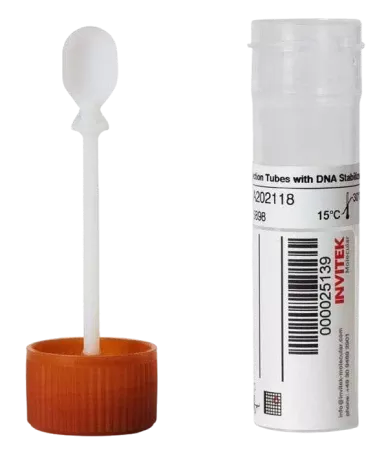
- Form
- At-home stool kit
- Price
- $625 one-time, confirmed after eligibility review
- Prescription
- Not required; results reviewed with a licensed clinician
- FDA status
- Laboratory-developed test; not FDA-cleared or approved
How Gut Biome Analysis works
You collect a small stool sample at home using the kit and mail it to the lab. The lab extracts bacterial DNA and sequences it to identify which groups of bacteria are present and in what relative amounts. The report typically includes a diversity measure and inferred functions, such as the potential to make short-chain fatty acids.
Who it’s for, and who it isn’t
May be a fit
- Adults without significant gut symptoms who want a baseline picture of their gut bacteria
- People planning a sustained diet change who would like a before-and-after snapshot
- People curious about links between the gut, weight and metabolism who understand the evidence is early
- People who have already had standard blood work
Usually not a fit
- Anyone with blood in the stool, black stools, unexplained weight loss, anemia or a lasting change in bowel habits: see a clinician first
- Replacing colorectal cancer screening such as colonoscopy or FIT
- Diagnosing IBS, inflammatory bowel disease, celiac disease or food allergies
- People with ongoing gut symptoms, who may be better served by a clinical evaluation or the GI Effects + Microbiomix panel
What’s included
- At-home stool collection kit with return packaging
- Analysis by a CLIA-certified laboratory
- Clinician review of your report alongside your history and labs
- Online visit to discuss practical next steps
- No membership fee
Possible side effects
- No physical side effects; collection is non-invasive
- Results can be hard to interpret and may prompt unnecessary diet restriction or supplement buying
- Recent antibiotics, illness or travel can skew a single snapshot
This isn’t a complete list. Your clinician reviews risks, interactions and warnings with you before prescribing. In an emergency, call 911.
What the evidence says
The gut microbiome is an active research field with strong links to health in population studies. But an international expert consensus published in The Lancet Gastroenterology and Hepatology in 2025 concluded that evidence supporting the clinical usefulness of microbiome testing is scarce, and warned that direct-to-consumer tests lack regulatory consensus and proven value.
What the test measures
Your gut contains trillions of microbes. This test reads the bacterial DNA in a stool sample to estimate which groups are present and how they compare with each other. Reports often include a diversity score and estimates of what those bacteria may be capable of producing.
It does not measure how well you digest food, whether your gut is inflamed or whether you absorb nutrients well. Those questions need different tests.
What experts say about microbiome testing
In 2025, an international panel of microbiome researchers and gastroenterologists published a consensus statement on microbiome testing in clinical practice. They concluded that evidence supporting its clinical usefulness is scarce, and that commercial tests are offered without agreed standards or proven value.
That does not make the test useless. It means results are best read as context rather than instructions, by a clinician who can keep you from over-interpreting them.
Making sense of a diversity score
Many reports lead with a single diversity number. In research, greater diversity of gut bacteria has often been associated with better health, and lower diversity with some chronic conditions. But these are associations seen across groups of people, and there is no agreed healthy range for an individual.
A lower score than average is not a diagnosis, and a higher one is not a clean bill of health. Different labs use different methods, so scores are not comparable from one company to another. Your clinician looks at the overall pattern alongside your diet, medicines and symptoms rather than chasing one number.
Who it may suit, and who it doesn't
The test fits people without worrying gut symptoms who want a baseline, perhaps before a sustained change toward more fiber and plant variety, or alongside metabolic or weight goals.
It is not the right first step if you have symptoms. The National Institute of Diabetes and Digestive and Kidney Diseases lists anemia, rectal bleeding, bloody or black stools and weight loss as signs that need further evaluation, which may include a colonoscopy. If you have persistent bloating, pain or bowel changes, the GI Effects + Microbiomix panel or an in-person work-up may be more appropriate.
It is not a cancer screen
A microbiome report cannot detect colorectal cancer or polyps. The National Cancer Institute notes that most expert groups recommend average-risk adults begin colorectal cancer screening at 45, using options such as colonoscopy or stool-based tests like FIT.
If you are 45 or older and not up to date on screening, your clinician will encourage you to arrange it with your primary care doctor or a gastroenterologist.
Midlife changes that affect the gut
Many things that shift in your 40s and 50s can affect digestion and gut bacteria: changes in estrogen and progesterone around menopause, new medicines such as GLP-1s, acid reducers or antibiotics, less physical activity, and changes in sleep and stress. Some people notice more bloating or constipation during these years.
A microbiome snapshot can sit alongside these conversations, but it rarely explains symptoms on its own. Your clinician will ask about these factors first, because they are often easier to act on than a list of bacterial names.
Collecting your sample
Collection takes a few minutes at home with the supplies in the kit. Your instructions will explain how to time it around antibiotics, probiotics and other medicines, since recent antibiotics in particular can change results for weeks.
Because the microbiome shifts with diet, travel, illness and medication, a single result is a snapshot. If you retest later, try to collect under similar conditions.
After your results
Your clinician reviews the report with you and focuses on practical, low-risk steps, such as building fiber gradually or broadening the variety of plants you eat. You will not be handed a long list of supplements to buy.
Gut Biome Analysis is a laboratory-developed test run by a CLIA-certified lab; it has not been cleared or approved by the FDA. The price is $625, one-time, confirmed during your eligibility review. There is no membership fee.
Go deeper on Gut Biome Analysis
 Getting startedGut Biome Analysis · Reading your report · 4 min readWhat your gut microbiome diversity score meansWhat a gut microbiome diversity score measures, why it varies between labs and from day to day, what affects it, and why a low or high score is not a diagnosis.Read more
 Getting startedGut Biome Analysis · GLP-1 medications · 4 min readGLP-1 medications and your gut microbiomeHow semaglutide and tirzepatide affect digestion, what is known and unknown about GLP-1s and gut bacteria, and whether a microbiome test is useful while on one.Read more
 HormonesGut Biome Analysis · Menopause · 4 min readMenopause and your gut microbiomeHow menopause may change gut bacteria, what the estrobolome is, what the research does and does not show yet, and what you can do for gut health in midlife.Read more
Prescription treatments are available only to eligible patients after a clinical evaluation by an independently licensed clinician.
Gut Biome Analysis: common questions
Can this test diagnose IBS or other conditions?
No. IBS is diagnosed from symptoms and history, and conditions such as IBD or celiac disease need specific medical tests.
Will it tell me which probiotic to take?
Not reliably. There is no validated way to pick a probiotic from a microbiome profile, so your clinician will not base supplement advice on it.
Is my microbiome stable?
It changes with diet, travel, illness, antibiotics and other medicines, so one result reflects that moment.
Is this test worth it?
It can be useful context if you are curious and symptom-free. If you have symptoms or a specific medical question, other tests usually come first.
Should I choose this or GI Effects + Microbiomix?
This test focuses on bacterial composition. If you have ongoing gut symptoms, the broader panel adds digestion and inflammation markers.
Does it replace a colonoscopy?
No. It cannot detect polyps or cancer. Keep up with recommended colorectal screening from age 45.
Is it covered by insurance?
Generally not. HealifyMD does not bill insurance, but HSA or FSA funds may apply depending on your plan.
Sources
We cite government agencies, professional societies and peer-reviewed research. See our editorial policy.
- International consensus statement on microbiome testing in clinical practiceThe Lancet Gastroenterology and Hepatology (University College Cork repository)
- Diagnosis of irritable bowel syndromeNational Institute of Diabetes and Digestive and Kidney Diseases
- Tests to detect colorectal cancer and polypsNational Cancer Institute
- Laboratory developed testsU.S. Food and Drug Administration